Wednesday, March 18, 2015

Weekly Wednesday # 16: Choosing the Proper Gear - Part III - WHAT THE COLLARS??

My oh my, the variety we have to choose from! The dog collar section/category is ENDLESS!


Chain Slip Collar/Choke Chain
http://upload.wikimedia.org/wikipedia/en/3/31/SlipCollar_wb.jpg


Metal Prong Collar/Pinch Collar
http://dogingtonpost.com/wp-content/uploads/2014/04/prongcollar.jpg


Martingale Collar
https://www.pinkpuppydesigns.com/media/catalog/product/cache/1/image/9df78eab33525d08d6e5fb8d27136e95/m/c/mc-daldot.jpg


Flat Buckle Collar
http://www.schutzhund-bite-sleeves-k9-store.com/images/large/Flat-Buckle-Collar-with-quick-release-buckle-BREED_LRG.jpg


Head Collar - Many Varieties
http://ecx.images-amazon.com/images/I/51QUZijSAGL._SX300_.jpg


https://encrypted-tbn2.gstatic.com/images?q=tbn:ANd9GcRi5pGJ6vARYDGCPoCoiavrrj8j4vKPK_eqoso1QOnaBk43g0RO1w


Whew, I'm sure there are some I have missed, but isn't this enough to make you ask what is the purpose of so many collars? Do they all have the same function? Are there safety precautions? How do I use them? Is it fitted properly? .... As I researched the BAZILLION collars, those questions came to my mind.  ... but what is the bottom line...?? As I guide clients what will I tell them??


Here is what was gathered:


  • One size does not fit all nor do they all have the same function.
  • Puppies, new to being on leash dogs, and easily distracted canine can benefit greatly from head collars because it quickly teaches your canine to pay more attention to you - the handler, and less attention to the environment.  It also discourages the bad habit of pulling.
  • All collars were NOT meant to fit loosely.  Ex: Standard Pinch/Prong collar must fit snug ...if it is loose, or rides too low on your dog's neck, it can cause injury.
  • We want to be well informed dog owners, so we must take in knowledge and shop around - see what fits best for your skill set and your canine's need. Ask trained professionals and follow the manufacturers directions to ensure safety.


Sooooooo, here is the fun part... to test my research... my sweet puppy foster, Ariel... who likes to hold the leash in her mouth when we walk... will soon be fitted for a head collar...   

 I'll keep you posted.... haha!


Happy Training all!!
Pet Charmer
www.pet-charmer.com


Wednesday, March 11, 2015

Weekly Wednesday #15 Choosing the Proper Gear Part II - What should we know about crates?


(Crate, Apartment and Kennel are used interchangeably)

 To crate or not to crate, that is the question.... :)

I want to be a well informed dog owner, lover, and trainer so to do that I must know the tools used in the field, know how to use them properly, and understand their benefits.  As I researched crates, a few areas stood out: the types of crates, how they help, the correct size for your canine, and what to avoid.

For the types I deferred to Animal Behavior College (ABC) who lists the following:


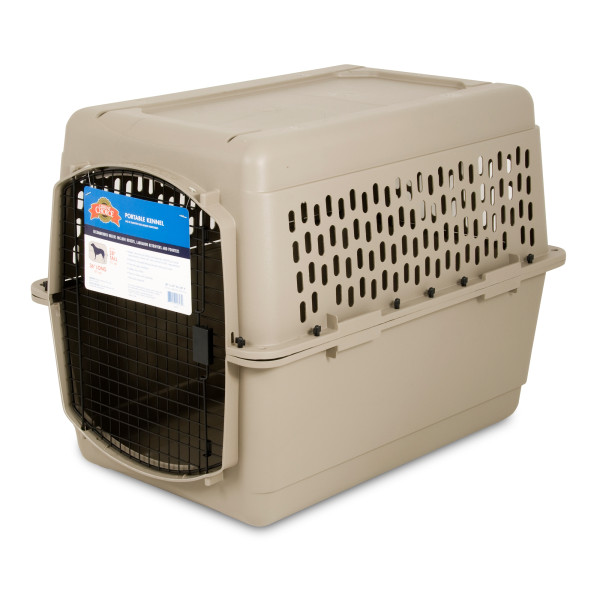
Airline Crate - I had no idea they were also called this, but these are your standard plastic crates with a wire door.
http://www.dryfur.com/wp-content/uploads/2011/05/grreat-choice-kennel.jpg

Wire Crate - Normally has a top and a front door.  The bottom pan is normally removable for easy cleaning.


http://www.northcoastpets.com/pics/pics_on_site/mid_bigdog.jpg

Puppy Playpens - First day of dog training, setting up a puppy playpen was our assignment... what fun!  Playpens are a great containment tool made of fabric, metal or plastic and has multiple flexible joints and can be 32 to 48 inches in height.
.
http://thumbs2.ebaystatic.com/d/l225/m/mDF1gr_lb4y3qFsXzG6iL6w.jpg


http://s2.hubimg.com/u/1475655_f260.jpg


How do crates Help?
Remember that dogs enjoy creating dens; crates fulfill this need.  Trainers and owners alike enjoy the housebreaking benefits of crate training.  Crates also create a safe environment when travel.  Puppy playpen type crates are beneficial for creating a secure play area when 100 percent supervision is difficult. 


What of the crate size and what should be avoided when using or purchasing a crate?
No matter the type of crate, be sure your canine has PLENTY of room to stand up and turn around comfortably.  Make it fun for them!  Leave their favorite toy or treat inside the crate. 
AVOID using the crate as punishment, we want no negative associations with crating.  We should also avoid extended duration in the crate and always read the directions with any equipment purchased.


I hope you find this PCPTT helpful in your training needs.

Happy Tails and Merry Jingle Bells,
Pet Charmer


Wednesday, March 4, 2015

Weekly Wednesday #14 Choosing the Proper Gear - Part I - Leash Edition


Imagine a runner not having the appropriate shoes or a cyclist not having the best tire for the type of terrain.  Participating in any sport or activity with improper gear equals safety issues.  Dog walking and dog training are no different.  To safely walk and train your canine, the proper leash is needed.  


Leads, leashes, retractable leashes, long line leashes and hands-free or waist leashes have different uses and are all available in different styles, lengths, widths, and types.


Leashes typically have a loop handle on one end and a clasp (metal) on the other end which attaches to the harness or collar.  
http://www.supercoolpets.com/pictures/lead.jpg


Leads, similar to leashes have a loop handle on one end and a non-slip loop on the other end.  I find that leads give the handler better control.  


http://i.ebayimg.com/00/$T2eC16J,!)kE9s4Z-4v3BRj2SwnOzw~~_32.JPG


It's interesting, the width and size of the leash greatly depends on the size of the dog.  Example: A 100 pound dog would rule your walk or training session with a 1-inch wide leash.


Retractable leashes.... let me just go ahead and get this out... I hate them.  They are horrible and I will not endorse the use of them for walking or training.  Many will disagree for retractable leashes are most comfortable to them.  NEVER should you use a retractable leash with a slip, martingale, or pinch collar because these collars are designed to give instant correction for pulling.  Retractable leashes can make a loud noise and can frighten your dog.  This style of leash should not be used on strong, habitual pullers.
http://all-4-pets.co.uk/wp-content/uploads/34463.jpg

Long line leashes are about 10-50 feet long.  This style of leash is best used during recall training. The long line gives the dog the illusion that he is making the decision.  Since there is a potential for the line to get tangled on the hind legs, always supervise your dog when using long lines.
http://dogsnaturally.co.uk/wp-content/uploads/2014/10/clix-long-line-dog.jpg

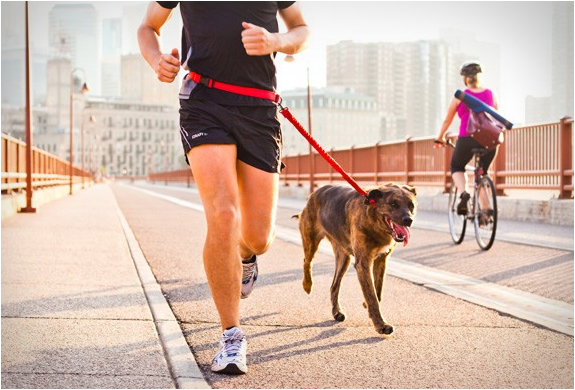
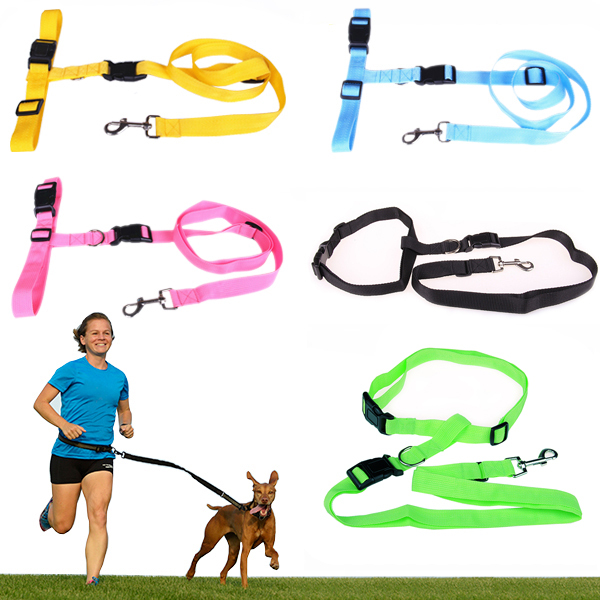
The hands-free or waist leash is not one that I have used, but I am curious about it and will soon check it out.  I do understand from research that it allows the trainer to safely work with the dog from a distance and can be an excellent choice if you have issues juggling training tools and the leash.  
https://encrypted-tbn2.gstatic.com/images?q=tbn:ANd9GcToV3aX2LGWtZlXs7Cbf2oDVoEONfloXnwIVG1fecX9QIs5alMO
http://i00.i.aliimg.com/wsphoto/v2/1794844750_1/Adjustable-Handsfree-font-b-Dog-b-font-Walking-Running-font-b-Waist-b-font-Belt-Pet.jpg

I beseech you to do your research as you look for the proper leash for training or walking your dog.  The right equipment matters! 

Happy Training!

Wednesday, February 25, 2015

Weekly Wednesday #13 Massages are not just for humans....


Do you enjoy and see the benefits of receiving a massage?  How do you feel afterwards?  Just speaking on the subject makes me want to book my next massage...
http://www.yourholisticdog.com/wp-content/uploads/2011/04/AyraultPHOTOHANDPAW-e1303180220411.jpg

I strongly believe in the power of the human touch.  But why would it be needed for our animals?  Well, living in this stressful, domesticated human world our animals take on our stress and inactivity.  In the wild, they hunt, engage in social grooming and play; through this they stay toned and fit.

 Massage takes the human touch to the next level.

Animal Massage goes back to the Egyptian cave paintings and the Renaissance paintings.  Get this, according to http://www.massagetherapy.com/articles/index.php/article_id/409/Animal-massage

 "A full body massage was recommended for dogs and horses by Flavius Arrianus, a philosopher and administrator under the reign of Roam Emperor Hadrian.  He stated it would "knit and strengthen the limbs...make the hair soft and its hue glossy...and cleanse the impurities of the skin""

Through massage toxins are released, muscle mask is relaxed, stress is released, metabolism is increased, intestinal activity is increased, pain decreases, and the emotional bond increases... and you know strengthening the emotional bond is what Pet Charmer is about!
http://inclover.com/wp-content/uploads/2009/08/mainpic_massage.jpg

We at Pet Charmer believe that animal massage adds to the existing skills of dog trainers and pet sitters.  Pet massage is a continued education course that will soon be FULLY added to Pet Charmer services.


Happy Tails and Merry Jingle Bells,
Pet Charmer


Tuesday, February 17, 2015

Weekly Wednesday #12 Forms of Learning


To improve the likelihood of a child/student grasping an idea; parents/teachers must be capable of identifying and adapting to the child's/student's style of learning.


Did you know animals have various forms of learning?  Animal learning is rather complex, yet the subject is constantly improving through research.  According to Animal Behavior College (ABC) a few of the known ways in which canines learn are:


  • Orienting Reflex
  • Single Event or Perceptual Learning
  • Desensitization and Habituation Learning
  • Sensitization Learning
  • Flooding
  • Learned Irrelevance
  • Back-chaining
  • Pattern Learning/Real-Life Learning

We won't discuss them all but each way of learning is a pretty cool research subject... you will be surprised then happy because you are now able to put a label to many of the things you are doing on a daily basis.


Two styles I have used or seen used successfully in dog training are Pattern Learning/Real-Life Learning and Desensitization and Habituation Learning.


Through Desensitization and Habituation Learning your dog is "trained" to not "sweat the small stuff" the daily encounters of human life. -- Car horns, helicopters, beeping large trucks.  The resulting behavior is your dog looking/observing the distraction but not reacting.
It is unwise to use this method without a trainer's guidance. Improper application of this training method can cause a fear response.


Pattern Learning/Real-Life Learning fits obedience training into your daily schedule:

                                  Ex: sit-stay before food bowl is placed on floor.
                                         sit-stay to put leash on or take leash off.
                                         down-stay while the front door is open.

Canines learn basic obedience vocabulary through routine.  Look for ways to train your dog through day to day activities... a trainer can help improve your success and be your guide through the process.

Happy Training!!!

Monday, February 16, 2015

Project: Shy/Fearful Canine Lucy


What an amazing day I was privileged to be an active participant in.  My words may slightly move your emotions, but to BE there.... Multiply it times 125!  SO Amazing! Here we go!

Lucy is the mother of Ariel (Karma) - the puppy I fostered. (pictured here)


Official Training Day #1:     2-07-2015.    Lucy would not allow me to come within arms length of her.  She happily accepted ALL of my treats and then quickly scooted back into her safety zone of arms length.  Any type of eye contact meant going backwards 22 steps in our training progress. I felt frustrated and knew I had to quickly change my thinking in order to change the energy I emitted.  So I decided to look for and praise the SMALLEST effort... At least she was not totally unreachable. When she sat, laid down, or gave the play bow I treated her along with saying "good girl Lucy" .   I left feeling defeated yet simultaneously multiple training ideas to help Lucy progress would enter my mind.

Official Training day #2:    2-14-2015.     To be honest,  I was looking for a reason not to go and visit Lucy.  This little girl was a challenge.   She hated me, she ate all of my treats and wouldn't let me touch her!!! (Pout, pout, hands in pocket, kicking rocks) yet I could not stop thinking about her since the first encounter. I know she would enjoy the world more if we can get past this.  I knew "Flooding" was my best bet.  I knew she had the advantage because of the space the HUGE backyard provided.  ALL of this was going through my mind yet I did not want to go.  

I am being open with you about the internal fight because the potential challenge of training your current canine or your future rescue is real!!! They will make you not want to continue, but don't give up!!!!!!!

So, I fought with myself more and finally got dressed to see my treat accepting,  challenging friend Lucy.  I walked through the wooden gate, fastened it behind me and called her name.  She is always happy to see me (my treats)! -This was our 3rd time meeting yet 2nd time training. 
"Lucy, come see what treats I have for you today", I said.  She bounced around me playfully wagging her tail and giving me the play bow.  I tried yet another strategy.  I lowered my body position; I went from kneeling, to sitting, to eventually laying on the ground.  A brief opportunity arose for me to leash her, but she was too quick! Finally, I said enough is enough! I will love on you today!  You guys, here's the greatest moment ever...I slowly paced back and forth trying to corner her off into a smaller section of the yard...it took some time but I finally got her in a situation...her only option was to go up a flight of stairs... And who would be waiting for her at the bottom??? Yours truly!  It was the standoff to top of all standoffs!! As Lucy tried to dash past me, I caught her...like a soft football she snuggled her face in the pit of my elbow,  she leaned into me so hard.  It was like she needed this moment, she was ready, yet afraid.  My hands trembled as I felt her anxiety rise to a high peak then slowly slip away with every reassuring touch.  I flooded her with touch and praise.  I told her that she was extremely brave to trust me. We bonded. During all of this I did manage to get the leash on her.  We trotted around the backyard and took a brief stroll to the front yard.  I stopped multiple times to pet and praise her.  The treats no longer took precedence!  She's happier, I can already see it.  Just wait until those dog park adventures begin!!!! 

It was SOOOO hard leaving Lucy this day! I can't wait to see her this weekend. (Lucy's pictures are below)

Happy Tails and Merry Jingle Bells,

Wednesday, February 11, 2015

Weekly Wednesday #9 Loose-leash walking - no pulling

Loose-leash walking - no pulling


Exercise, exercise, exercise cannot be stressed enough. Exercise is vital to a dog's mental and physical fitness. What if walks are unpleasant because your canine is a puller or a wanderer? You are in luck, Pet Charmer can help you with that. I will share with you the method I used for Jingle, keep in mind there are several methods. Jingle was a horrible puller, as we walked people would say: "she's taking you for a walk again, I see" - at first, I had no idea what they were speaking of. Jingle was most definitely IN CHARGE during our past walks. Animal Behavior College ( ABC ) corrected many of my misunderstandings about dogs and training. I was taught, it is my dog's responsibility to keep slack in the leash. So, I implemented one method that stood out to me " go back to kindergarten ". It really is as simple as it sounds... stop, go back, start over. In the beginning, Jingle and I did A LOT of starting and stopping. Here are the steps we took: 1. Put the leash on your dog. Your hand should be through the loop of the leash. Your arm should not be overly extended from your side. Walk as normal. 2. Once you see there is no slack in the leash and your arm is extended beyond your side STOP THE WALK IMMEDIATELY. Two things may happen: (A) your dog should look back at you and wonder what the heck just happened. (B) your dog may ignore you and continue trying to pull. 3. If "A" happens, treat your dog for acknowledging you, ask your dog to come back to your side, treat for coming back to you, and the restart your walk. If "B" happens, give the "eh-eh" sound (this indicates to your dog that he is giving the wrong behavior and it needs to end), walk the opposite direction in which he is pulling, end your walk completely. What message does this send? 1. You are in charge. 2. Pay attention to You because your walk route and speed can change at any moment. 3. No pulling. Be patient with yourself and your canine. This is probably new to you both! Practice daily, at least 20 minutes. This can even be practiced in the house. Don't over practice because then you remove the FUN from your walks. The more consistent you are, the better your relationship will be with your dog because they will know what is expected. I tried to capture Jingle going back to kindergarten in the attached video, I hope it helps. Happy training!!! #DOGS #trainandplay #rescue #adopt #foster #getactive #volunteer #dogtrainer #supportanimalrescue #petchat #PETCHARMER #DOGTRAINER #supportyourlocalshelter