Showing posts with label pet sitter. Show all posts

Wednesday, March 4, 2015

Weekly Wednesday #14 Choosing the Proper Gear - Part I - Leash Edition


Imagine a runner not having the appropriate shoes or a cyclist not having the best tire for the type of terrain.  Participating in any sport or activity with improper gear equals safety issues.  Dog walking and dog training are no different.  To safely walk and train your canine, the proper leash is needed.  


Leads, leashes, retractable leashes, long line leashes and hands-free or waist leashes have different uses and are all available in different styles, lengths, widths, and types.


Leashes typically have a loop handle on one end and a clasp (metal) on the other end which attaches to the harness or collar.  
http://www.supercoolpets.com/pictures/lead.jpg


Leads, similar to leashes have a loop handle on one end and a non-slip loop on the other end.  I find that leads give the handler better control.  


http://i.ebayimg.com/00/$T2eC16J,!)kE9s4Z-4v3BRj2SwnOzw~~_32.JPG


It's interesting, the width and size of the leash greatly depends on the size of the dog.  Example: A 100 pound dog would rule your walk or training session with a 1-inch wide leash.


Retractable leashes.... let me just go ahead and get this out... I hate them.  They are horrible and I will not endorse the use of them for walking or training.  Many will disagree for retractable leashes are most comfortable to them.  NEVER should you use a retractable leash with a slip, martingale, or pinch collar because these collars are designed to give instant correction for pulling.  Retractable leashes can make a loud noise and can frighten your dog.  This style of leash should not be used on strong, habitual pullers.
http://all-4-pets.co.uk/wp-content/uploads/34463.jpg

Long line leashes are about 10-50 feet long.  This style of leash is best used during recall training. The long line gives the dog the illusion that he is making the decision.  Since there is a potential for the line to get tangled on the hind legs, always supervise your dog when using long lines.
http://dogsnaturally.co.uk/wp-content/uploads/2014/10/clix-long-line-dog.jpg

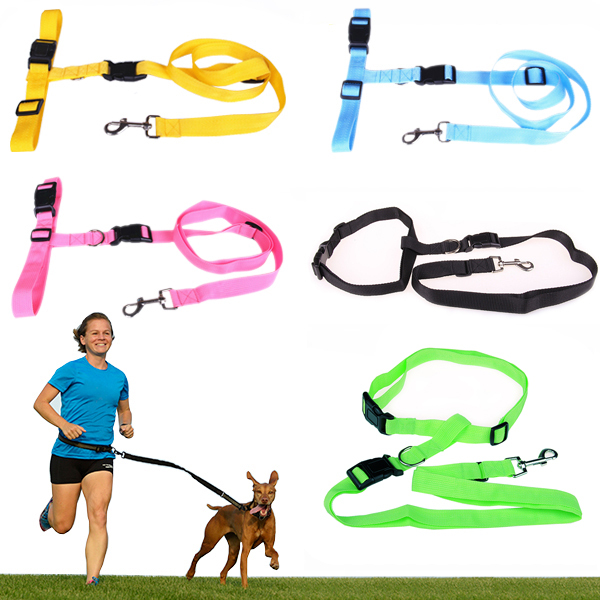
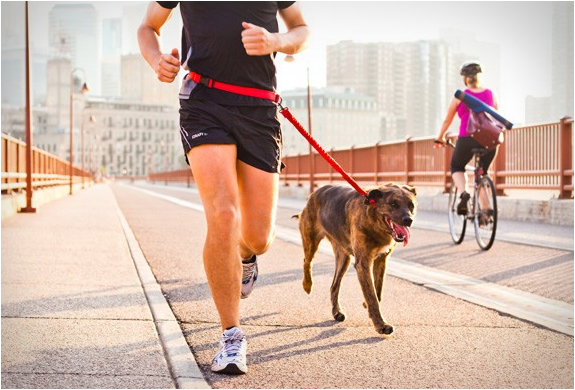
The hands-free or waist leash is not one that I have used, but I am curious about it and will soon check it out.  I do understand from research that it allows the trainer to safely work with the dog from a distance and can be an excellent choice if you have issues juggling training tools and the leash.  
https://encrypted-tbn2.gstatic.com/images?q=tbn:ANd9GcToV3aX2LGWtZlXs7Cbf2oDVoEONfloXnwIVG1fecX9QIs5alMO
http://i00.i.aliimg.com/wsphoto/v2/1794844750_1/Adjustable-Handsfree-font-b-Dog-b-font-Walking-Running-font-b-Waist-b-font-Belt-Pet.jpg

I beseech you to do your research as you look for the proper leash for training or walking your dog.  The right equipment matters! 

Happy Training!

Tuesday, February 17, 2015

Weekly Wednesday #12 Forms of Learning


To improve the likelihood of a child/student grasping an idea; parents/teachers must be capable of identifying and adapting to the child's/student's style of learning.


Did you know animals have various forms of learning?  Animal learning is rather complex, yet the subject is constantly improving through research.  According to Animal Behavior College (ABC) a few of the known ways in which canines learn are:


  • Orienting Reflex
  • Single Event or Perceptual Learning
  • Desensitization and Habituation Learning
  • Sensitization Learning
  • Flooding
  • Learned Irrelevance
  • Back-chaining
  • Pattern Learning/Real-Life Learning

We won't discuss them all but each way of learning is a pretty cool research subject... you will be surprised then happy because you are now able to put a label to many of the things you are doing on a daily basis.


Two styles I have used or seen used successfully in dog training are Pattern Learning/Real-Life Learning and Desensitization and Habituation Learning.


Through Desensitization and Habituation Learning your dog is "trained" to not "sweat the small stuff" the daily encounters of human life. -- Car horns, helicopters, beeping large trucks.  The resulting behavior is your dog looking/observing the distraction but not reacting.
It is unwise to use this method without a trainer's guidance. Improper application of this training method can cause a fear response.


Pattern Learning/Real-Life Learning fits obedience training into your daily schedule:

                                  Ex: sit-stay before food bowl is placed on floor.
                                         sit-stay to put leash on or take leash off.
                                         down-stay while the front door is open.

Canines learn basic obedience vocabulary through routine.  Look for ways to train your dog through day to day activities... a trainer can help improve your success and be your guide through the process.

Happy Training!!!

Monday, February 16, 2015

Project: Shy/Fearful Canine Lucy


What an amazing day I was privileged to be an active participant in.  My words may slightly move your emotions, but to BE there.... Multiply it times 125!  SO Amazing! Here we go!

Lucy is the mother of Ariel (Karma) - the puppy I fostered. (pictured here)


Official Training Day #1:     2-07-2015.    Lucy would not allow me to come within arms length of her.  She happily accepted ALL of my treats and then quickly scooted back into her safety zone of arms length.  Any type of eye contact meant going backwards 22 steps in our training progress. I felt frustrated and knew I had to quickly change my thinking in order to change the energy I emitted.  So I decided to look for and praise the SMALLEST effort... At least she was not totally unreachable. When she sat, laid down, or gave the play bow I treated her along with saying "good girl Lucy" .   I left feeling defeated yet simultaneously multiple training ideas to help Lucy progress would enter my mind.

Official Training day #2:    2-14-2015.     To be honest,  I was looking for a reason not to go and visit Lucy.  This little girl was a challenge.   She hated me, she ate all of my treats and wouldn't let me touch her!!! (Pout, pout, hands in pocket, kicking rocks) yet I could not stop thinking about her since the first encounter. I know she would enjoy the world more if we can get past this.  I knew "Flooding" was my best bet.  I knew she had the advantage because of the space the HUGE backyard provided.  ALL of this was going through my mind yet I did not want to go.  

I am being open with you about the internal fight because the potential challenge of training your current canine or your future rescue is real!!! They will make you not want to continue, but don't give up!!!!!!!

So, I fought with myself more and finally got dressed to see my treat accepting,  challenging friend Lucy.  I walked through the wooden gate, fastened it behind me and called her name.  She is always happy to see me (my treats)! -This was our 3rd time meeting yet 2nd time training. 
"Lucy, come see what treats I have for you today", I said.  She bounced around me playfully wagging her tail and giving me the play bow.  I tried yet another strategy.  I lowered my body position; I went from kneeling, to sitting, to eventually laying on the ground.  A brief opportunity arose for me to leash her, but she was too quick! Finally, I said enough is enough! I will love on you today!  You guys, here's the greatest moment ever...I slowly paced back and forth trying to corner her off into a smaller section of the yard...it took some time but I finally got her in a situation...her only option was to go up a flight of stairs... And who would be waiting for her at the bottom??? Yours truly!  It was the standoff to top of all standoffs!! As Lucy tried to dash past me, I caught her...like a soft football she snuggled her face in the pit of my elbow,  she leaned into me so hard.  It was like she needed this moment, she was ready, yet afraid.  My hands trembled as I felt her anxiety rise to a high peak then slowly slip away with every reassuring touch.  I flooded her with touch and praise.  I told her that she was extremely brave to trust me. We bonded. During all of this I did manage to get the leash on her.  We trotted around the backyard and took a brief stroll to the front yard.  I stopped multiple times to pet and praise her.  The treats no longer took precedence!  She's happier, I can already see it.  Just wait until those dog park adventures begin!!!! 

It was SOOOO hard leaving Lucy this day! I can't wait to see her this weekend. (Lucy's pictures are below)

Happy Tails and Merry Jingle Bells,

Tuesday, February 10, 2015

Weekly Wednesday #11 Canine Communication – What is the Message?


Communications that result in a misunderstanding between parties is frustrating, chaotic, and a waste of time. 


To put it poetically:  Understanding is the soft carriage that holds the message…it is cradled in communication as it journeys to the ear then through the soul, the heart can do nothing but act.

Clear understanding of the message your dog is sending through body, face, and voice enhances trust; therefore, solidifying your relationship.

Owners and trainers alike should strive to improve reading and understanding the sophisticated language of dog posture. 

Of the many postures I feel the following are top know for all:


Offensive Threat Body Posture and 
images from: Dog body language


Stress Body Posture


In the offensive threat body posture the dog is aggressive and ready to attack.  This posture is important to be on the alert for safety reasons.  Dogs in this posture should be allowed to refocus and calm down before progress can be made.  The hackles are up, the tail is up and stiff, the nose is wrinkled and the dog is standing forward on its toes.  (Picture a football player’s stance).  Be cautious!


Next, recognizing the stress body posture is important for both groups because it is a great BREAK TIME indicator.  Stress can also be a result of the dog’s environment or a specific object in close proximity.  Some stress body posture signs include ears back, body lowered, tail down, and rapid panting with corners of the mouth back.  The body is screaming GET ME OUT OF HERE… NOT COMFORTABLE… AT ALL…

Once you understand the body postures be a good leader, be quick to acknowledge your dog’s need, and be ready to make the necessary adjustments. 


For more information on canine body language, ASPCA is an excellent resource.

The American Society for the Prevention of Cruelty to Animals

https://www.aspca.org/pet-care/virtual-pet-behaviorist/dog-behavior/canine-body-language

Happy Training!!